


How students prioritise their money at Uni
University has become a solid right of passage for most young adults in the UK, with the number of undergraduates increasing year on year. However, while it can enrich lives bringing forth a whole host of unforgettable experiences and valuable skills, it also comes with a huge price tag. This can be challenging; as the cost of living rises in the UK, so does the amount students have to spend on their daily outgoings to survive.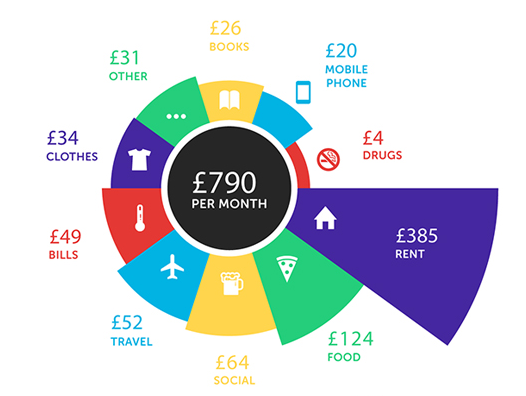
The main cost for students, and certainly the biggest, is of course university fees, but these are normally out of the way before a student even starts their course whether paid outright or via their student loan. Rent, according to Natwest’s Annual Student Living Index found that apart from accommodation, groceries were found to be the biggest expense. So with university fees, accommodation and food being a huge and expensive outlay, this leaves little for students to ‘play with’ – this means brands are fighting with each other for the rest of the pot.
It’s no surprise that students’ income mostly comes from their loans, maintenance grants, part-time jobs, and of course the bank of mum and/or dad if they’re lucky. This raises an important question for marketers hoping to target the student audience – what do students spend their money on, and are they going to spend it on what I’m selling?
Accommodation
A recent survey from Save the Student revealed what students spent their money on, which is a great source of information for brands as this gives huge insight into their spending power as well as their priorities/biggest costs. It’s no surprise that the main cost for students is accommodation, with an average of £385 being spent on rent each month.
 Groceries
Students spend on average £124 a month on food, including stocking up on cupboard essentials and going out for meals or ordering takeaways. This figure, while relatively high, could suggest that students aren’t necessarily going out for restaurant meals all that often, which could present an opportunity for restaurants. There are tonnes of deals out there for students to encourage them to have an active social life between all the studying. Daily deals or student discounts are a great way for relevant brands to encourage sales and are extra appealing for cash-strapped students.
Socialising
The next highest spend on the list is ‘social’, including going out for drinks, nightclub entry and any other social activities such as bowling, cinema etc. This being the third highest spend among students shows that making and maintaining friendships is a strong priority for students during term time. This is useful for marketers to know as any advertising or marketing activity can take these personal priorities into account. Also, any brands wishing to appeal to the students’ social sensibilities can run promotions to tap into this further (e.g. 2 for 1 on drinks with a student card).
Travel
Next on the list is travel, presumably students travelling to university and also home for visits with family. Again, this is another important cost on the minds of students which marketers can tap into, whether considering promotions or delivering appropriate messaging and information. Students can often become homesick when moving away from family for the first time, so this is likely why the spend comes so high up in the list, as well as taking the rising costs in petrol and train/bus fares into account.
General
Household bills (such as internet, gas and electricity) followed by clothes, books, drugs, and ‘other’ are also part of a student’s outgoings. Clothes came in at £34 per month, which suggests that looking good and keeping up with trends is an important focus while at university. We all remember that first dress-down day at school and how important it was for us to look good – this is what students probably go through each day, so it’s not just down to how they look, it’s how they feel and demonstrating their individuality. We don’t know exactly what ‘other’ encapsulates, but it may be things such as music and other entertainment, beauty products and household items as well. Again, showing that social elements are of the most importance to students.
/cdn0.vox-cdn.com/uploads/chorus_asset/file/3403146/heres_looking_at_you_obama.0.gif) Study & Communication
Study & Communication
The final bit of spending is on books – we’re going to assume for university studying – and mobile phone bills, which again leans toward the social aspect of students spending. Students will be using their mobiles not only to keep in touch with friends and family, but also as a study aid, so this is a key spend although not a high one. More often than not, students will already have a contract with a provider in place before heading off to uni, but for those that don’t striking while the iron is hot, i.e. as soon as the new term begins, with deals or switch over offers is a great way to get students on board.
So, what we can gather is that the social aspect of studying and being at university is what takes priority. This suggests that these feelings are what marketers need to focus on when appealing to the student market. Not only that but as students cut back their spending in certain areas to save for others, they will be more susceptible to promotions which target them, especially if you play on their personal priorities.
So are students on your brands agenda this year? If so, be sure to get in touch!


 Be Relevant
 Whatever your campaign message is or however you are communicating it, students love to play games and love to compete against each other and other student groups, as well as universities. Harnessing the playfulness of students has a major impact on student campaigns.

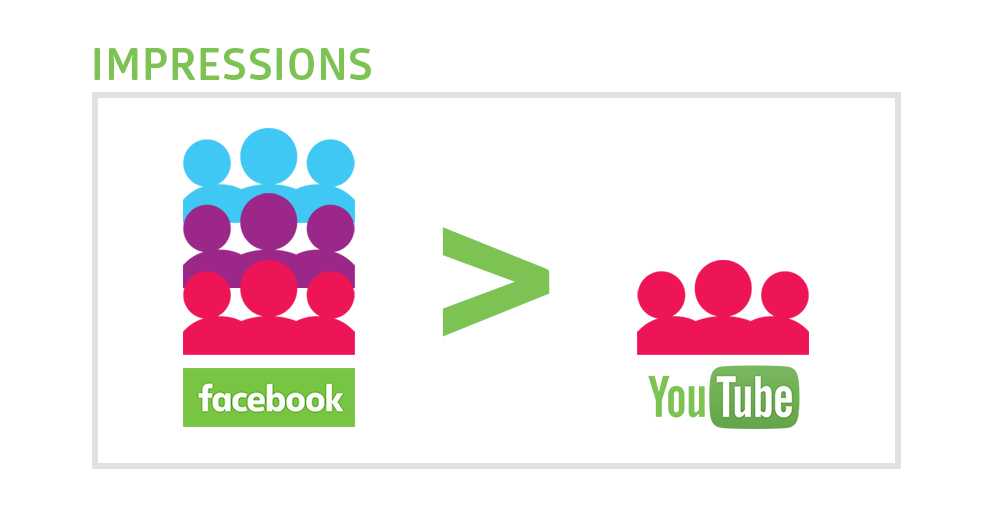 Once your video has been created and you are ready to go, you’re faced with the decision of where to promote your video to get the best reach. Where are you going to find the largest audience? And where are you going to get the best ROI? The first answer to jump into your mind will likely be YouTube, but you’ll find now that Facebook is a strong competitor for native video. Facebook has been prioritising video content on newsfeeds for a while now, meaning that people that like your page are more likely to see video content from you in their feeds than text or image-based content. Also, another selling point for uploading natively on to Facebook is that if you decide to promote your video on the social channel you will see greater results and a wider reach for a smaller budget (when compared to YouTube). Facebook videos get more impressions and more views at a lower cost (Moz). Facebook wants to drive the success of video advertising on the site and as such has made a number of developments to further entice advertisers, such as 360-degree video and Facebook Live.
 There is also the option to upload videos natively to other social channels, such as Twitter and Instagram, which will further increase the organic reach and give more options to explore other paid promotion routes. These channels are working to improve their platform for video results but at the moment it seems to be key sectors that are finding their videos working well on these platforms. Beauty and style videos are finding their footing on Instagram, while Twitter is currently pushing live content and sports videos with a partnership with NFL. Twitter themselves tell us that video on Twitter is viewed 4 times more than other content on the platform (Twitter at SM London Live). Using other channels, like e-newsletters for example, also help to increase viewership and convert engaged fans from your database into new followers on social channels and subscribers on YouTube.

 They are socially aware when compared to generations before them, which can be somewhat credited to the advancement in technology and the increased accessibility of information. Social media in particular has brought about a new way for consumers to interact with brands; they are now more involved than ever with the decisions and actions that they make!
 Humanise your brand and personalise your approach
 Give them some advice

 1 Using auto messages to welcome people to your social media pages
 4 Posting links to your website or trying to promote your product on someone else’s page
 7 Spammy posts











 3. They like to share
 It can be hard to track how millennials are interacting with brands. The introduction of smartphones and portable devices means you can’t just assume that people are in their homes using their desktops when they access your site. Your marketing must now be fully integrated, mobile optimised and cohesive to deliver the same message across all channels. This way it will be easier for millennials to receive it as they are always changing between devices.


 It’s better to pick a few social media channels and do them well rather than trying to reach individuals across all of them. Choose the platforms that best represent what your company is about and remember millennials will most likely be using a variety of technology, so be sure to cater to varying demographics within your target audience.


 …Offer Experiences. To attract a millennial you must be appealing in the right ways; the trend these days appears to be brand experiences over ownerships. A person may buy a product or service from you, but have they been given an experience online or in store?
 Millennials have grown up with technology and are much more comfortable making purchases via smartphones and handheld devices when compared to older generations. Make sure your websites are optimised for other devices; this way people will be able to check out your products wherever they are!